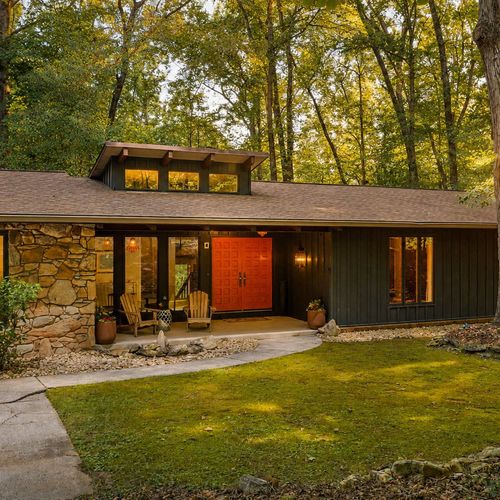


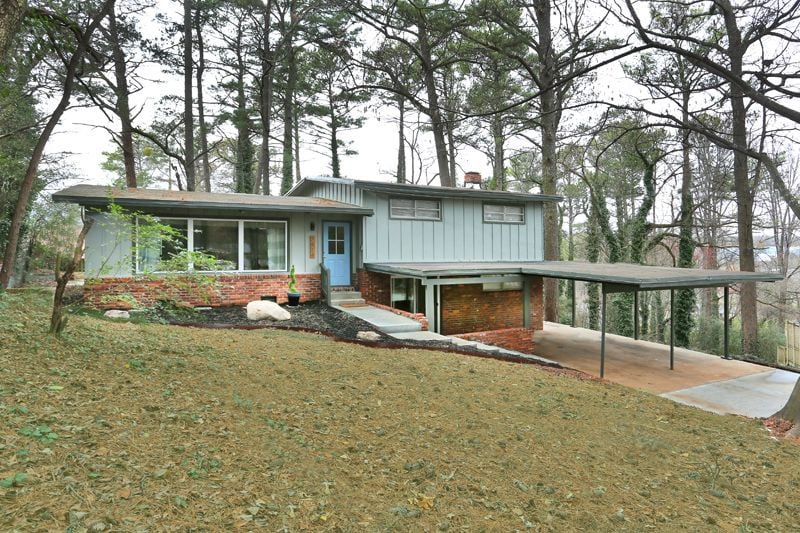
Mid-century modern homes sell on proof, price, and story, in that order. Document what's original and who designed it, price for the buyer who values the architecture rather than the broadest possible crowd, then use the first week as a live test of whether your price and presentation are reaching that buyer. A listing like 3474 Thornwood Dr. is a useful case study because it succeeds or stalls on exactly those three things.
Key Takeaways
Georgia MLS reported 4,753 residential sales across the 29-county Atlanta metro in October 2026, down 17.9% from a year earlier, so a distinctive home can't count on broad-market momentum to carry it.
Metro inventory stood at 4.83 months in October 2026, up from 4.72 months in September, which rewards sellers who position precisely instead of casting a wide, vague net.
In Decatur, single-family homes sold August through October 2026 went under contract in a median of 28 days, and 34% went under contract within two weeks of listing.
Claims like "architect-designed," "original," or "historic" should only appear in a listing when you can back them with permits, plans, or attributable expert evidence.
The first week is a measurable test of price and presentation, not a guarantee, and no universal "seven-day rule" exists for when to adjust.
What does 3474 Thornwood Dr. teach you about selling mid-century modern homes?
It teaches you that an address is only the opening line, and that what sells mid-century modern homes is the evidence and story attached to it. A street number can't tell a buyer who drew the house, what year it went up, or which details are original. The records can.
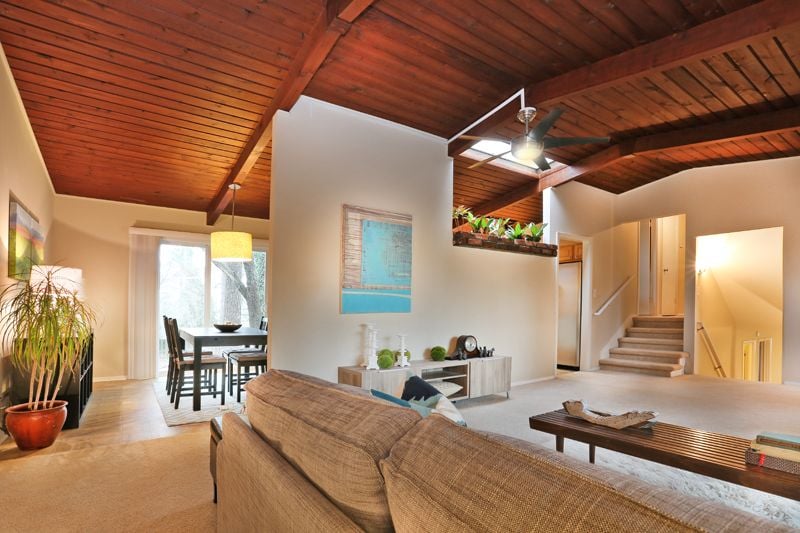
That's the first thing I do with a distinctive home, before a photographer or a price conversation. I build what I call an evidence file. A mid-century house is not interchangeable with a generic renovated one. Its value argument can rest on authorship, period details, site planning, materials, natural light, and how the inside relates to the outside. Every one of those is something a buyer will ask about, and every one needs a source.
What belongs in the evidence file?
Anything a design-literate buyer would want to verify before falling in love. For a house like this one, I'd gather:
Ceiling heights and window systems: what's original glass and framing, and what's been swapped.
Cabinetry, stone, and wood finishes: original, restored, or replaced.
Site and light: orientation, landscaping, and how the rooms open to the outdoors.
Mechanical updates: systems that were modernized behind the period surfaces.
Paper trail: permits, original plans, dated photographs, and seller records.
Here's how I match a headline claim to the proof that holds it up:
Claim you want to make | Proof to gather first |
|---|---|
"Architect-designed" | Original plans, permit records, or attributable evidence from a qualified local expert |
"Original" kitchen, windows, or finishes | Dated photographs and seller records showing what's original versus replaced |
"Renovated by" | Contractor invoices and permits for the work |
Year built | Public property records and permit history |
"Historic" or "recognized" | Documentation from the body that issued the designation, confirmed for that specific property |
A buyer who loves mid-century architecture will check. If your marketing says "one-of-a-kind" and the records say otherwise, you've handed them a reason to negotiate. If the records say it for you, you've handed them a reason to compete. I go deeper on how design affects price in Do Mid-Century Modern Homes Sell For More in Atlanta?
How should you price mid-century modern homes in the first week?
Price for the buyer who values the architecture, then treat week one as a test of whether that buyer is showing up. Nothing in the data supports a rigid seven-day rule, but the first stretch of showings and inquiries tells you more about your price and presentation than any estimate will.
Here's why I don't lean on the broad market to do the work. According to Georgia MLS October 2026 data for the Atlanta metro (a 29-county area, not the city of Atlanta alone), sales are down and listings are up compared with a year earlier:
Measure (Atlanta MSA, October 2026) | Figure | Change from a year earlier |
|---|---|---|
Residential units sold | 4,753 | Down 17.9% |
Median sales price | $383,500 | Up 0.9% |
Active listings | 27,383 | Up 2.0% |
New listings | 9,681 | Down 8.6% |
Georgia MLS also reported 4.83 months of residential inventory in October, compared with 4.72 months in September. A separate report from Atlanta REALTORS® counted 3,507 metro-area home sales and 7,261 new listings in October 2026. That report uses a different geographic and data framework, so I read it alongside the Georgia MLS numbers, not added to them. Both point the same direction: buyers have options, and a niche home has to give the right buyer a clear reason to act.
What does a faster-moving market look like next door?
Recent local market data for Decatur shows what a well-presented, well-priced listing can do. Single-family homes sold there August through October 2026 averaged 99.6% of list price. About 43% sold above list and 35% below, and the median home went under contract in 28 days. Over the same stretch, 35% of listings took a price cut averaging 5.4%. Decatur is a different market than Monroe Circle, and a median covers every style of home, so use it as context, not a forecast for any one house.
My take: don't price a design-forward home to be "safe." Price it where the right buyers feel a reason to move quickly, and the buyer who falls hardest for the house ends up setting the number. Overshoot, and the people who'd have loved it scroll past, then see a price cut and wonder what's wrong.
What should you watch during the first week?
Look at quality, not just volume:
Showing volume and repeat visits: a second look is worth more than three first looks.
Broker feedback: specific comments about price, condition, or layout.
Online engagement: saves and shares from people who actually engage with the design.
Inquiry quality: serious questions about original details, not just "is it still available?"
If you get plenty of attention but no serious follow-up, the issue is probably positioning, documentation, condition, or price. If you get little qualified attention at all, the price or the audience strategy needs a second look. Which one it is depends on your home, and that's the call I make with my sellers in real time. I break down the full sequence in What Sellers of Atlanta Mid-Century Modern Homes Should Expect From Listing Week.
How do you tell a design story without overselling it?
Lead with the home's personality, then make every adjective earn its place with a record. Buyers of mid-century modern homes are often the most informed readers you'll ever write for, so confident storytelling works, and invented storytelling backfires.
This is where cinematic marketing earns its keep. At DOMO Realty, I pair architecture-driven storytelling with photography and video that show how light moves through a room, how a wall of glass pulls the yard inside, and how a roof line meets the sky. A standard listing shot of a living room tells a buyer it has a living room. A good one tells them how the house feels at four in the afternoon.
Who are you actually writing for?
Not everyone. Aim the marketing at people who actively value mid-century architecture, such as design professionals, collectors of original details, buyers who've been waiting for a house like this, and agents who know distinctive Atlanta properties. I work with sellers across intown-east neighborhoods like Northcrest, Briarcliff Woods, Leafmore, and Oak Grove, and the principle holds anywhere: a targeted launch beats a broad, bland one. The research doesn't give a verified local statistic on this niche audience, so I build the pitch from the home's real attributes and the conversations I'm having with buyers directly.
A few rules I keep for the listing copy and photos:
Show original features in context, and say plainly what's been updated.
Describe light, volume, and indoor-outdoor flow in concrete terms.
Use "architect-designed" or "original" only when the file supports it.
Give the property its own voice. If the copy could describe any house, rewrite it.
If you're weighing who should run that launch, my posts on evaluating an agent's marketing plan and hiring a niche agent lay out what to ask.
FAQ
How should I price a mid-century modern home in Atlanta for its first week on the market?
Price it for the buyer who values the architecture, not for the widest possible audience. Your number depends on your home's condition, documentation, and location, so a local market analysis is the right starting point. I'll walk you through that analysis before we list.
How can I prove a home is architect-designed or historically significant?
Gather original plans, permit records, dated photographs, and seller records, or get attributable evidence from a qualified local expert. If a designation is claimed, confirm it with the body that issued it for your specific property. Don't put the claim in a listing until the proof is in hand.
How long should I wait before changing the price if my home gets little first-week activity?
There's no fixed timeline that fits every home. Look at showing volume, broker feedback, online engagement, and the quality of inquiries together. Attention without serious follow-up points to a different fix than very little attention, and I'd rather diagnose which one you have than guess.
Do original materials and architectural details add value to an Atlanta mid-century modern home?
They can set your home apart for the right buyer, but the effect on price depends on condition, documentation, and who's shopping. Original details work best when you can show what's original and what's been replaced. I can't promise a premium, and anyone who does is guessing.
Who generally pays Georgia's real estate transfer tax when an Atlanta home sells?
The Georgia Department of Revenue says the transfer tax is generally the seller's responsibility, though the parties may allocate it differently by agreement. It's a state tax, not an Atlanta-specific one, and it's collected through the closing process before the deed is recorded. Confirm how your contract handles it with your real estate attorney, who conducts the closing.
Ready to build a launch plan for your home?
897 Monroe Cir NE makes the point: for distinctive homes, the address starts the conversation, and proof, pricing, and storytelling finish it. If you own a mid-century or architecturally significant home in Atlanta, I'll help you assemble the evidence file, set a first-week price that fits the buyer you want, and build the marketing around what makes the house different. Schedule a consultation and we'll start with your home's story.
About Vanessa Reilly
Vanessa Reilly is the broker and REALTOR® leading DOMO Realty, Atlanta's destination for mid-century modern and architecturally significant homes. She pairs cinematic marketing and architecture-driven storytelling with smart pricing to help sellers of distinctive homes attract the right buyers.
DOMO Realty · (404) 556-1733
Equal Housing Opportunity. Regulated by the Georgia Real Estate Commission. This article is general information, not legal, tax, or financial advice; confirm your own numbers with your real estate attorney, tax advisor, or lender.
Check out this article next