

How long before listing should you start preparing your Atlanta house?
Start four to eight weeks before your intended launch date, and give yourself two to three months if the home needs real repairs, exterior work, or contractor scheduling. Preparing your Atlanta house before the listing appointment lets you fix problems, photograph a finished-looking home, and set a price with comparable sales in hand instead of guesswork.
Key Takeaways
- Across the wider Atlanta, GA market, 4,354 homes were for sale now and 1,187 new listings arrived in the last 30 days, per recent local market data as of November 2026, so your home competes on condition from day one.
- Homes that sold across the wider Atlanta, GA market in the trailing 90 days took a median of 51 days to go under contract, which is why a rushed launch is expensive.
- Plan four to eight weeks of prep for a typical home and two to three months when repairs or contractors are involved.
- The order that works is repairs, then cleaning and decluttering, then landscaping and staging, then photography, then final pricing and launch.
- Realtor.com reported that 23.7% of Atlanta listings had a price cut in September 2026, so pricing research belongs in your prep timeline, not at the last minute.
Picture the call I dread. A seller wants to list Friday. The back gutter is pulling away, the front trim is peeling, the closets are stuffed, and the first photographer opening is next week. Every one of those problems was fixable with time. None of them is fixable by Friday.
Getting an Atlanta house ready is mostly a scheduling problem. The work isn't exotic. The order and the lead time are what separate a launch that looks intentional from one that looks rushed.
What does the prep timeline for an Atlanta house look like week by week?
Work backward from launch day: find defects eight or more weeks out, finish visible repairs four to six weeks out, declutter two to four weeks out, and lock in pricing research in the final one to two weeks. These are planning windows I use with sellers, not market statistics, and your home may need more or less.
| Time before launch | Focus | Why it goes here |
|---|---|---|
| 8+ weeks | Find defects, line up contractors | Contractor calendars set your launch date, not the other way around |
| 4 to 6 weeks | High-visibility, high-consequence repairs | Visible fixes need time to finish and be cleaned up |
| 2 to 4 weeks | Declutter, organize, cleaning and touch-up list | Clears the way for staging and photography |
| 1 to 2 weeks | Comparable sales, competing listings, description, showing plan | Fresh data for the price decision |
Eight or more weeks out: find what would scare a buyer
Start with anything that undermines buyer confidence: active leaks, drainage problems, moisture or mold concerns, unsafe electrical conditions, HVAC trouble, damaged roofing, and deferred exterior maintenance. Then call contractors and ask when they can actually start. Their answer, not your wish list, tells you how early you need to begin.
If you can't tell what's behind a stain or a sticking door, a pre-listing inspection is one way to find out before a buyer's inspector does. Whether it makes sense for your home is a conversation to have with me early.
Four to six weeks out: fix the visible and the consequential
This window is for high-visibility work: correcting water-management issues, servicing HVAC systems before heavy seasonal demand, repairing damaged siding or trim, addressing peeling paint, and improving the exterior. Skip large discretionary renovations unless the likely buyer benefit clearly justifies the delay and the construction risk.
Two to four weeks out: clear the house
Declutter, move out excess furniture, organize storage areas, and build a room-by-room cleaning and touch-up list. Closets and garages get opened by buyers, so treat them as part of the product. Hold photography until repairs, cleaning, landscaping, and staging decisions are substantially done.
One to two weeks out: price and showing plan
Finalize comparable-sale research, review competing active listings, confirm the marketing description, finish touch-ups, and set a showing-readiness plan. If you haven't started the pricing conversation by now, you're behind.
Count backward from your actual launch month
Contractor and landscaping availability, weather, and holiday schedules all shift the plan. Say you want to launch in March 2027. Eight to twelve weeks back puts your start somewhere between early December and early January, holidays included. Name your launch month first, then count back. Don't borrow a timeline built for a different month.
Why should photography wait until repairs and staging are finished?
Photography should come after repairs, cleaning, landscaping, and staging because photos freeze your house in whatever state it's in that day. Shoot too early and you'll have outdated images online, or you'll pay for a second shoot.
The sequence I follow with sellers is: repairs, cleaning and decluttering, landscaping and staging, photography, final pricing and listing setup, launch. Photography is step four, not step one, even though it feels like the exciting part.
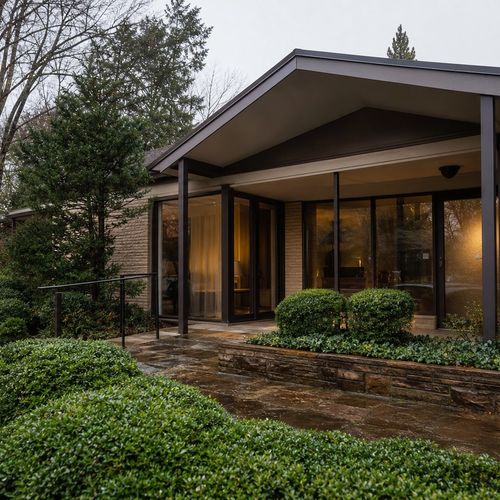
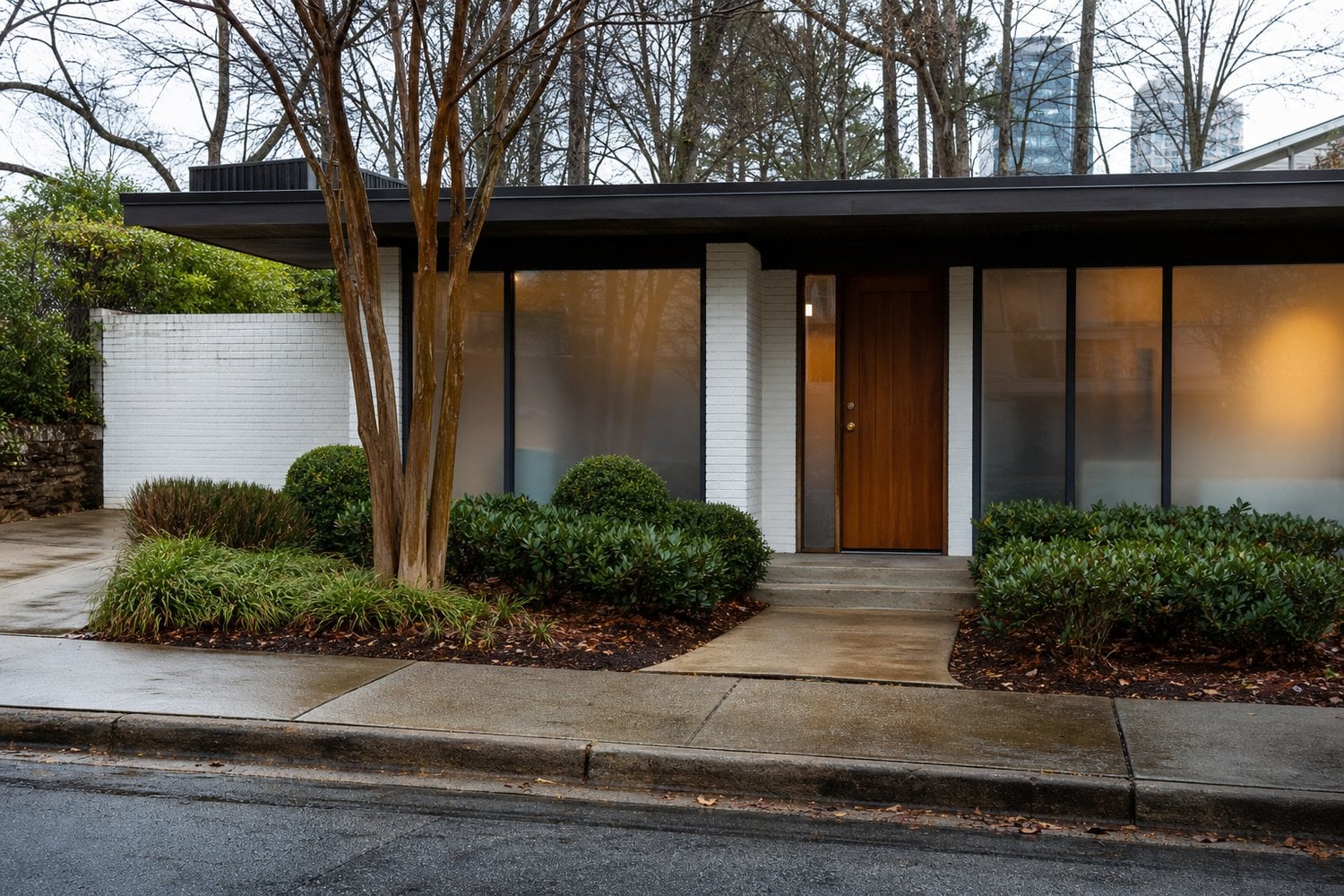
This matters even more for design-forward homes. A mid-century ranch with a wall of glass, original paneling, or a sculptural roofline needs the right light, a spotless interior, and a yard that frames the architecture. That takes lead time to plan. I build the shoot around the home's personality, which is the reason a distinctive house shouldn't get a cookie-cutter listing. If you want to see how this plays out once the home hits the market, read what sellers of Atlanta mid-century modern homes should expect from listing week. And if you're comparing agents on this point, my breakdown of how to evaluate an agent's marketing plan for modern homes shows what to look for.
One honest caveat: the National Association of REALTORS® Profile of Home Staging treats staging and presentation as marketing tools that can affect buyer perception and listing appeal. It doesn't justify promising a specific sale-price premium or a guaranteed drop in days on market, and I won't promise one either.
How do you decide what to fix, polish, or skip before selling your Atlanta house?
Sort every project into three groups: must-fix defects, presentation improvements, and optional renovations. The first group protects marketability and inspection confidence, the second improves photos and showings, and the third happens only when the benefit is clearly worth the cost, delay, and risk.
- Must-fix defects: leaks, drainage, moisture, unsafe electrical, HVAC problems, roof damage, deferred exterior upkeep.
- Presentation improvements: deep cleaning, decluttering, touch-up paint, trim repair, landscaping, staging.
- Optional renovations: kitchen or bath remodels, flooring replacement, additions.
The National Association of REALTORS® 2025 Remodeling Impact Report identifies projects that can improve buyer appeal and recovery of investment. It does not set a universal repair budget or timeline for every home, so don't assume every renovation pays back equally. I won't hand you a dollar figure here, because the only reliable number is a contractor's bid on your specific property. Get bids early, since that's the step that most often stretches the timeline.
Your Atlanta house is its own case. A 1950s ranch with original details has different priorities than a newer build with deferred exterior maintenance. That's the kind of sorting I do with sellers before we ever sign a listing agreement.
How do you research your Atlanta house price before the listing appointment?
Compare your home to recent sales and active competitors close to it, not to a metro median. A metro number tells you the weather in the region. It tells you nothing about your street.
For wider context, across the wider Atlanta, GA market the median sale price for homes sold in the trailing 90 days was $432,000, per recent local market data as of November 2026. Now look at how far apart two areas can sit:
| Area | Median Sale Price |
|---|---|
| Decatur | $315,000 |
| North Druid Hills | $559,263 |
Those are area-level medians. An individual home's value turns on its condition, street, build year, lot, floor plan, updates, and timing, which is why I price off the immediate competitive set. Atlanta city limits, Fulton County outside the city, and DeKalb, Cobb, Gwinnett, and Clayton counties can each bring different comparables and different contractor logistics.
Competition is real. The Atlanta REALTORS® Association's September 2026 market brief recorded 4.9 months of supply across metro Atlanta. Realtor.com's September 2026 Atlanta coverage reported that 23.7% of Atlanta listings had a price cut that month. A later price reduction can affect how a listing is positioned and what its market history looks like, so the first number deserves real homework.
My approach: open at a number the market believes, back it with photos that make people want to walk through the door, and let the buyer who falls hardest do the rest of the pricing. Preparation is what makes that possible. I also keep a close eye on what's competing with you. The 51-day median I mentioned is a median for homes that sold across the wider market, not a forecast for yours, and your condition and presentation can move your result either way.
Wondering who should run this process? My posts on hiring a niche agent for a mid-century modern home and choosing the best Realtor for one cover what to ask.
FAQ
How many weeks before listing should I start preparing my Atlanta house?
Start four to eight weeks before your intended launch, and two to three months ahead if the home needs substantial repairs, exterior work, or heavy decluttering. These are planning windows, not market statistics, and the right one depends on your contractors' availability.
What repairs should I make before selling my Atlanta home?
Fix anything that could shake buyer confidence first: leaks, drainage and moisture problems, electrical safety issues, HVAC trouble, roof damage, and deferred exterior maintenance. After that, handle visible items like damaged siding or trim and peeling paint. Hold big discretionary renovations until we've decided the benefit is clear.
Is it worth painting or replacing flooring before listing in Atlanta?
Fresh paint on peeling exterior surfaces and obvious touch-ups usually belong in the presentation group. Flooring replacement is typically an optional renovation unless the floors are damaged or unsafe. Get a contractor's bid and talk it through with me before you commit, since no universal answer fits every house.
When should I schedule professional real-estate photography?
Book it only after repairs, cleaning, landscaping, and staging are substantially complete. Photographing too early can leave outdated images online and may mean paying for a second shoot. Scheduling the photographer a couple of weeks ahead helps you hit that window.
Can I list my house while contractors are still finishing repairs?
It's better to finish first, because unfinished work shows up in photos and showings. If a project has a firm completion date, we can build the launch around it instead of rushing. Tell me what's in progress and I'll help you pick a realistic launch date.
Ready to build your launch timeline?
The core idea is simple: pick a launch date, then count backward through repairs, cleaning, staging, photography, and pricing. If you're thinking about selling, I'll walk through your home, flag what matters, and map your timeline with you. Schedule a consultation and we'll build your plan together.
Equal Housing Opportunity. DOMO Realty is regulated by the Georgia Real Estate Commission. This article is general information, not legal, tax, or financial advice. Please confirm your own numbers with your real estate attorney, tax advisor, or lender.
Check out this article next